
The third edition of the My Green Lab Europe Summit 2025 on Scalable Solutions for Wider Impact was an outstanding event that addressed the critical sustainability challenges and initiatives across various levels of the industry, ranging from individual product innovations to broader issues such as lab sustainability, Europe-wide policy and regulation changes. Bringing together leading thinkers in science, healthcare, and sustainability, the summit highlighted forward-thinking approaches and innovative projects aimed at improving the sustainability of laboratory operations.
With more than 950 registrations from 67 countries, including the United Kingdom, Ireland, Germany, Portugal, Switzerland, the Netherlands, France, Denmark, Spain, Italy, and more, the event attracted a diverse audience representing pharma, biotech, academia, as well as lab supply manufacturers, non-profits, and other key stakeholders.
Living Future Europe’s President Carlo Battisti Kicked Off the Summit
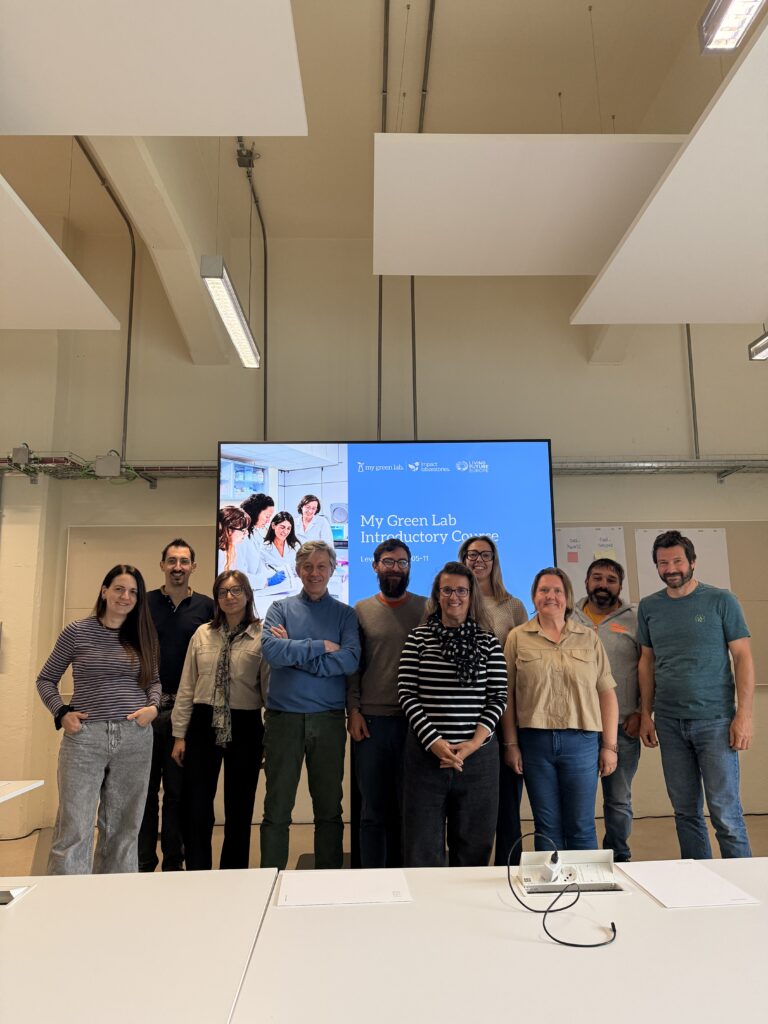
The Summit began with a welcome from Carlo Battisti, President of Living Future Europe. Carlo highlighted an exciting example of collaboration between Living Future Europe (LFE) and My Green Lab – LFE’s investor and partner: he introduced the NOI B6 laboratory building project, which will be developed at NOI Techpark, Bolzano — the home of Living Future Europe.
This new laboratory will pursue both Zero Carbon certification from Living Future and the My Green Lab Certification 2.0. As part of the design team, Living Future Europe is providing advisory services, with the project currently in the RIBA 4 design phase. The focus is on optimising structural design and maximising energy efficiency by utilising lean principles. This approach will help minimise both the embodied carbon of materials and the operational carbon related to energy use. Once completed, the building will be Italy’s first carbon-neutral laboratory.
James Connelly’s Opening Remarks on the Global Growth of My Green Lab
Following Carlo Battisti’s welcome, James Connelly, CEO of My Green Lab, took the stage for his opening address. He discussed the impressive growth of the global My Green Lab movement and its impact on sustainability across the pharma and biotech industries. James explained how this growth has led to the evolution of the My Green Lab certification scheme, which has now progressed to version 2.0, along with the pilot version of the ACT Ecolabel 2.0 for laboratory products. Both certifications are currently undergoing third-party verification to ensure compliance with new market requirements, such as the EU Directive 2024/825, which focuses on empowering consumers for the green transition (the Green Claims Directive).
He further emphasised how My Green Lab is continuously raising the sustainability bar by setting more ambitious thresholds, driving change in the pharma, biotech, academic, and healthcare sectors.
Keynote Speaker: Jürgen Wieland, Novartis
Following James’ address, the summit moved to the keynote session, where Jürgen Wieland, Development Environmental Sustainability Lead at Novartis, shared his insights. Jürgen presented the impressive sustainability roadmap that Novartis is following, which includes ambitious targets such as reducing scope 1-2-3 carbon emissions by 45% by 2030 and 90% by 2040, with 95% of their labs certified in alignment with the UN Race to Zero campaign breakthroughs. He also discussed the role of industry partnerships in driving environmental goals, exemplifying a model of ‘co-opetition,’ where competitors collaborate to advance sustainability objectives.

Panel Discussions
The summit then proceeded with three engaging panel discussions, which explored various aspects of lab sustainability:
Solutions in Action: How Lab Products are Revolutionising Sustainability
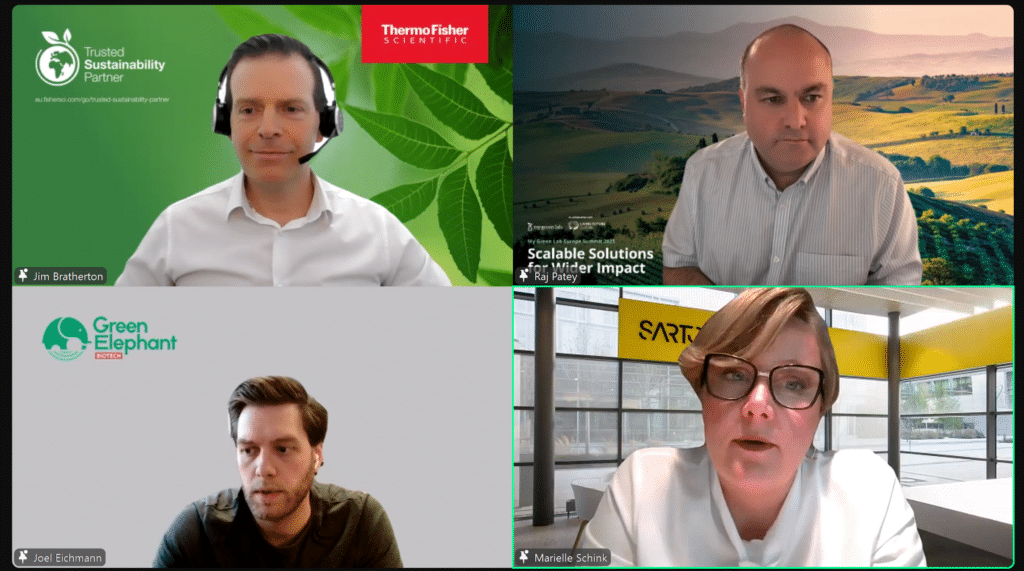
Moderated by Raj Patey, Business Development Director at Impact Laboratories (a subsidiary of My Green Lab, providing certification services), this panel featured three case studies from leading companies:
- Sartorius’s Marielle Schink discussed how eco-design and circular economy requirements are driving the development of lab products.
- Green Elephant Biotech’s Joel Eichmann shared how they’ve replaced fossil fuel-based raw materials with biobased (corn-based PLA) materials, reducing carbon footprints by 50%.
- Jim Bratherton from Thermo Fisher debunked the myth that sustainability leads to higher costs, demonstrating that sustainability efforts have driven the market to achieve price parity between green and traditional products. He highlighted that effective supplier conversations are key to creating positive impacts.
Bridging Efficiency and Impact: Greener Labs at the Organisation Level
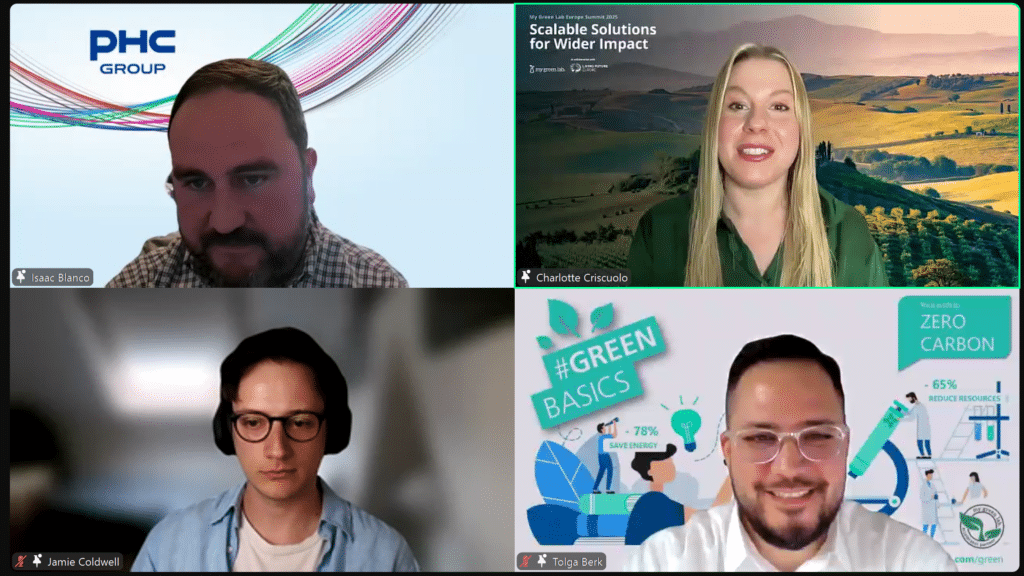
Moderated by Charlotte Criscuolo, My Green Lab’s Sustainability Certifications Coordinator, this panel focused on scaling sustainability strategies within organisations.
- Jamie Coldwell of Cytiva explained how Cytiva uses the My Green Lab framework as part of their kaizen continuous improvement cycle. He pointed out that the long time-to-market for lab products ultimately limits the options available for effective decarbonisation. Therefore, sustainability requirements must be integrated from the very start of product development.
- Both Tolga Berk from Waldner Gruppe and Isaac Blanco from PHC Europe discussed energy savings: efficient lab layout and system designs, and the efficient maintenance of ultra-freezers are crucial life science organisations achieving sustainability goals.
From Policy to Progress: Tackling Greenwashing and Driving Sector-Wide Change
The final panel, moderated by Pernilla Sörme, My Green Lab’s Senior Director of Research and Technical Standards, addressed how to tackle greenwashing and transform policies to drive real change towards sustainability.
- Addie Müntzenberger of Avantor warned not to be overwhelmed by policies. She emphasised the importance of using them to drive more transparent information to users and asking the right questions of suppliers.
- Stuart Helmer of CMS discussed the importance of being consistent with claims. It was perfectly aligned with anti-greenwashing policies, being implemented in the EU, UK, Switzerland and other countries.
- Sönke Fischer from ASI
concluded that up to 50% of current sustainability claims could soon be invalid, highlighting the need for substantiated and credible claims.

Watch the Recording
If you weren’t able to attend live, you can still watch the recordings using your registration code or by requesting a new code upon free registration here. Enjoy!