Living Future Europe recently delivered a two-part introductory course on My Green Lab and sustainable laboratory practices as part of the *Level Up 2026* programme, bringing together researchers and technical professionals from Eurac Research and the Laimburg Research Centre in Bolzano, Italy.
The workshops explored how sustainability can be integrated into laboratory environments through operational improvements, systems thinking, and organisational culture. Participants came from a remarkably diverse range of research contexts — including biobanks, genomics, photovoltaics, façade testing, heat pump systems, analytical laboratories, and sustainability management — creating a rich interdisciplinary exchange.
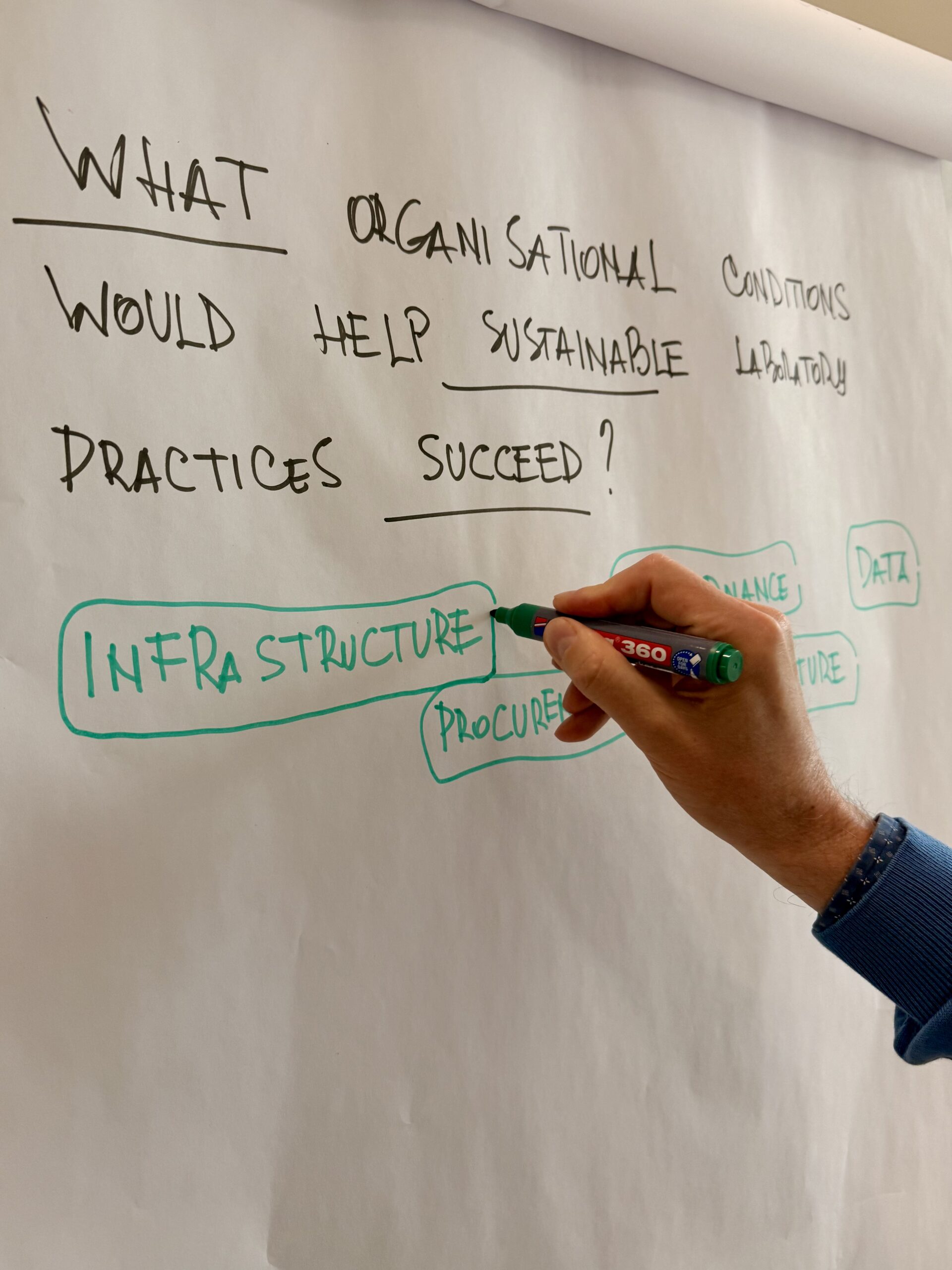
Rather than focusing only on technical solutions, the course encouraged participants to reflect on how sustainability is shaped by everyday routines, infrastructure, procurement systems, and institutional decision-making. Through discussions, exercises, and hotspot analyses carried out directly within their own laboratories, participants identified recurring themes across very different research environments: energy-intensive infrastructure, procurement challenges, limited visibility of impacts, and the importance of behavioural and organisational change.
The second workshop session focused on moving from awareness to structured action. Participants explored sustainable procurement, environmental transparency in scientific supply chains, and the role of the My Green Lab® ACT® Ecolabel in supporting more informed purchasing decisions for laboratory equipment and consumables.
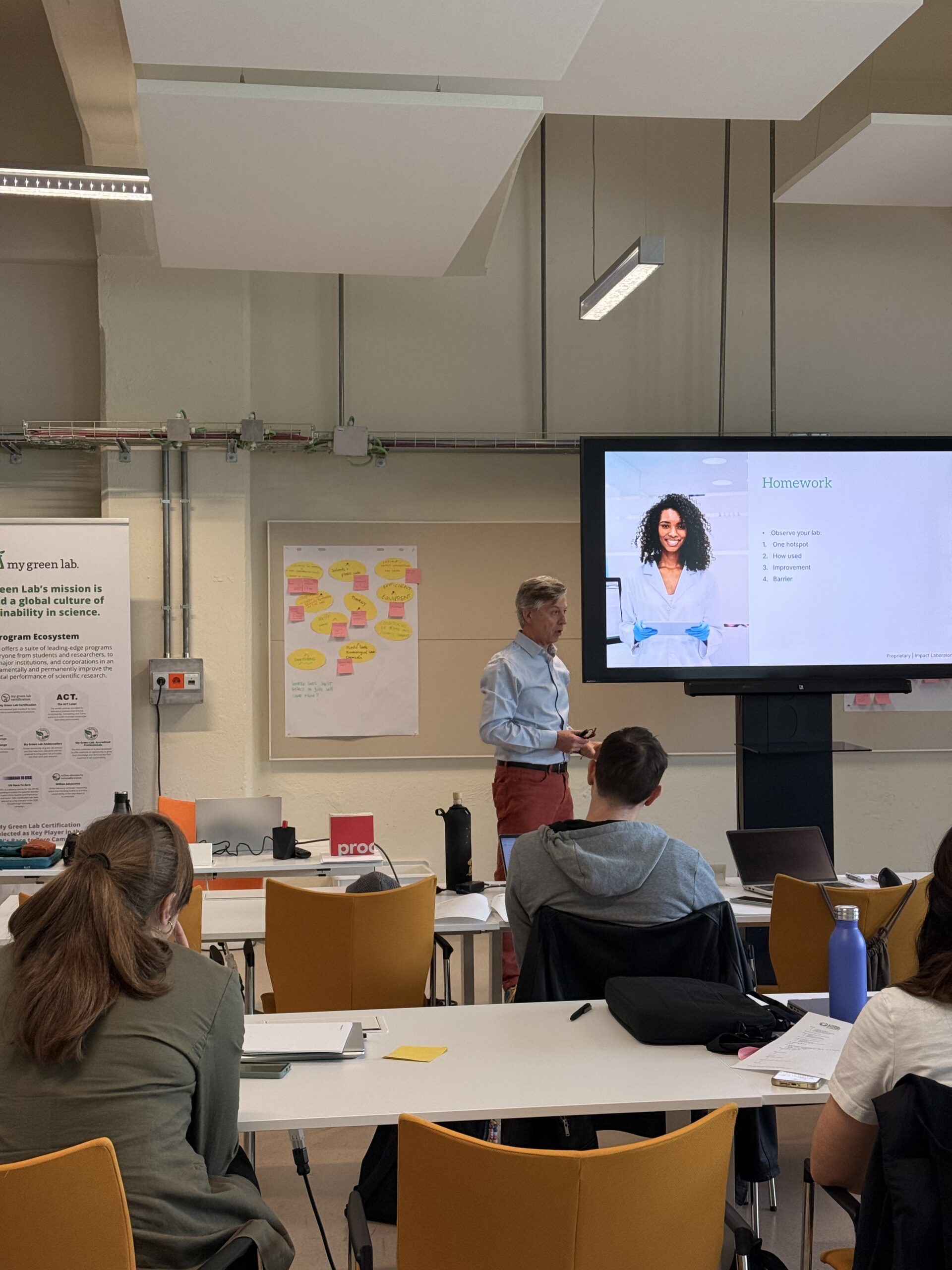
The programme also introduced the broader My Green Lab ecosystem, including My Green Lab® Certification and engagement tools designed to help laboratories structure sustainability efforts over time. Importantly, discussions highlighted that sustainability in research environments is not only about individual actions, but also about creating organisational conditions that enable continuous improvement, collaboration, and visibility of impacts.
One of the most valuable outcomes of the workshops was the recognition that, despite the diversity of laboratories involved, many sustainability challenges are shared. Whether working in biomedical research, renewable energy testing, or analytical laboratories, participants identified similar barriers related to infrastructure, procurement practices, operational routines, and coordination across teams.
The workshops concluded with a collaborative reflection on how research organisations can better support sustainable laboratory practices through governance, monitoring systems, training, pilot initiatives, and cross-team collaboration.
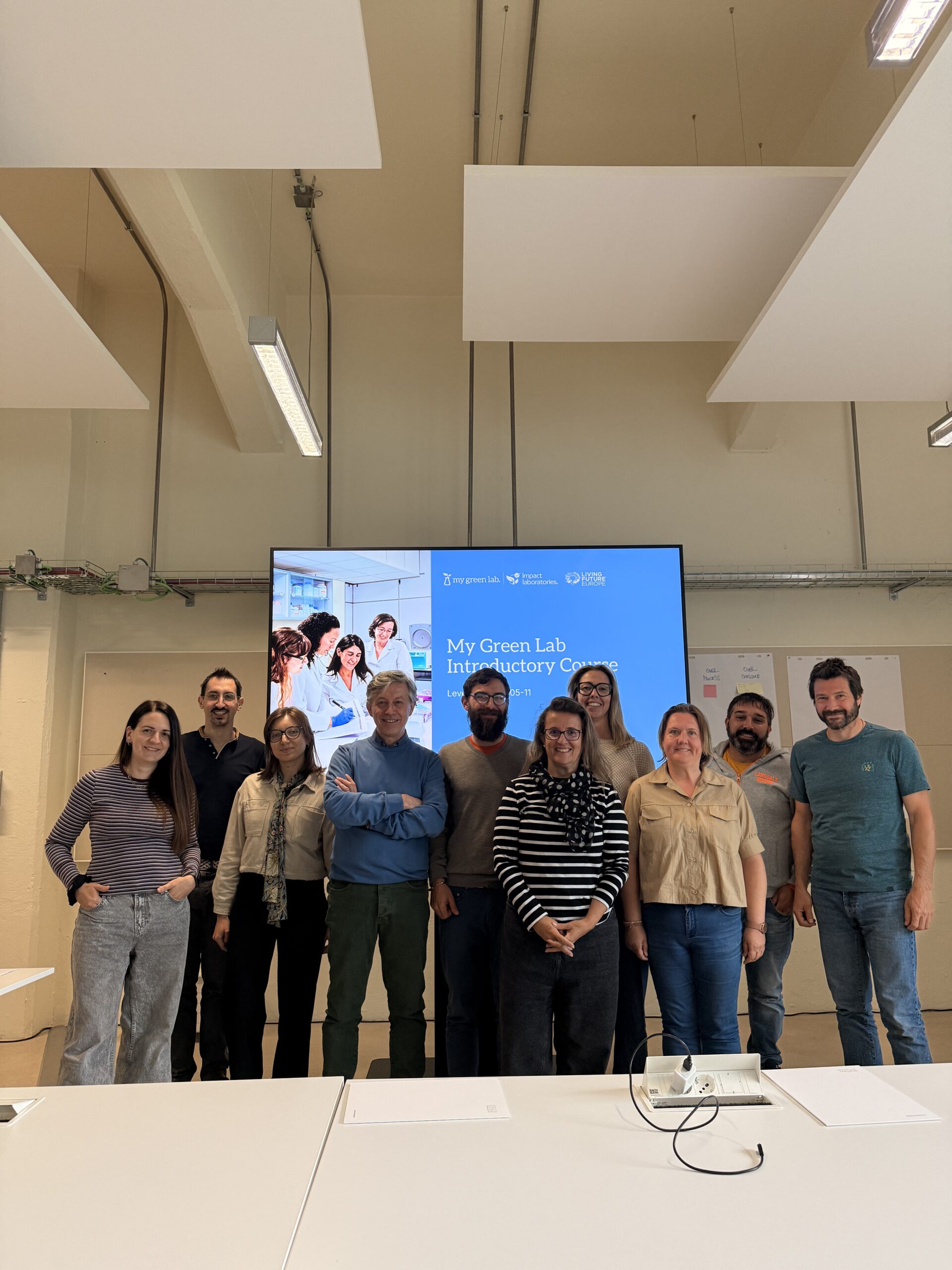
For Living Future Europe, the programme represented an important opportunity to support the development of a broader sustainability culture within scientific and technical research environments — one grounded in operational realism, interdisciplinary dialogue, and continuous learning.