Lessons from the Biblioteca Gabriel García Márquez on mass timber, institutional confidence, and civic construction
Across Europe, municipalities are responsible for a large share of new construction. Schools, libraries and civic centres are procured continuously, yet their structural systems remain highly standardised. Even cities with strong climate commitments often deliver public buildings using familiar reinforced-concrete construction, largely because procurement processes prioritise reliability, regulatory clarity and long-term operational confidence.
The Biblioteca Gabriel García Márquez in Barcelona provides insight into how this condition may be changing.
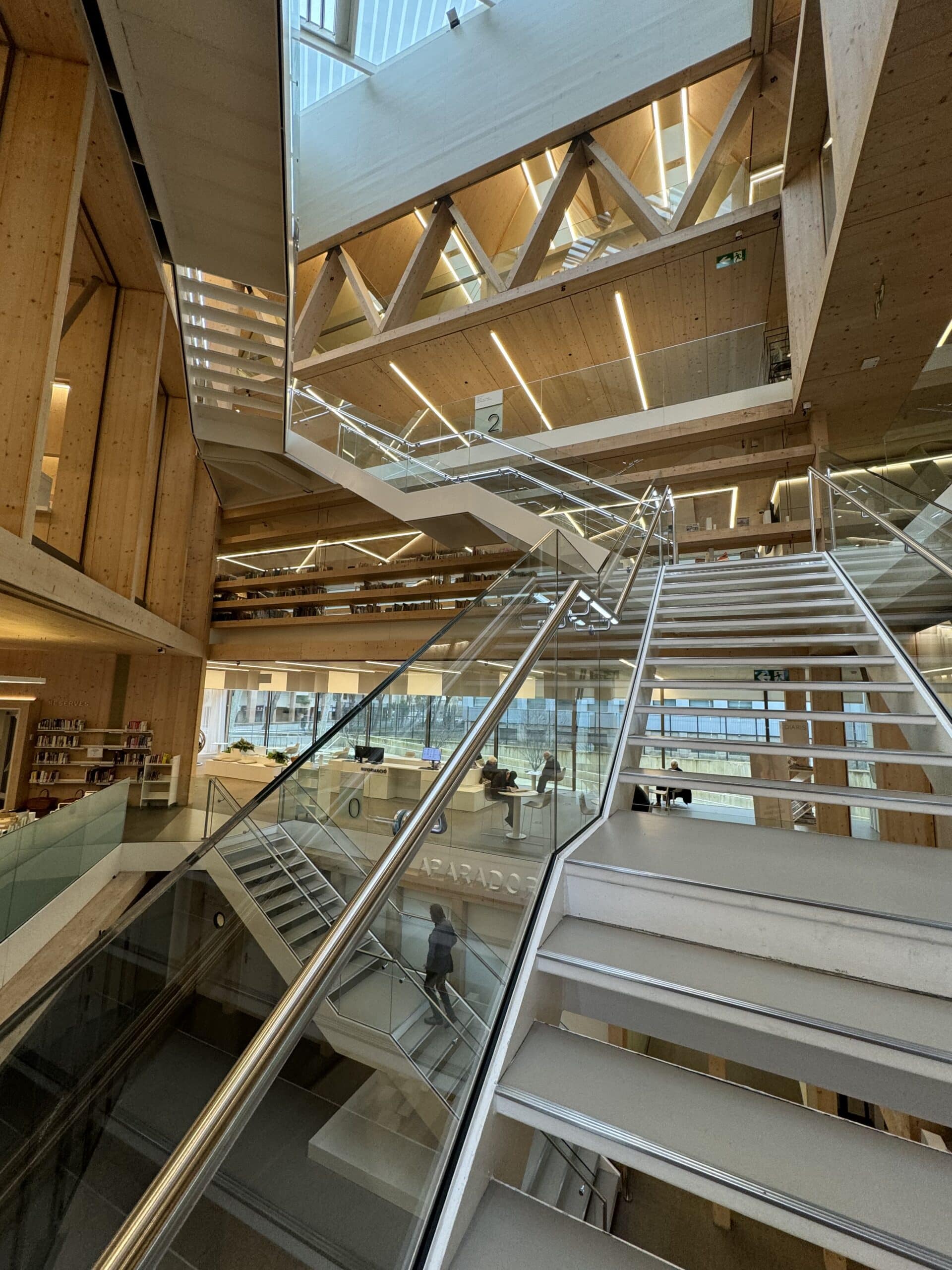
Completed in 2022 in the Sant Martí district, the building operates as a neighbourhood public library – a daily civic service rather than a demonstration project. Its significance therefore lies less in architectural expression than in the fact that a conventional municipal client accepted a multi-storey timber structure within a standard delivery framework.
The building was designed by SUMA Arquitectura for the Ajuntament de Barcelona. From early design stages, the project proposed a mass-timber structural system in place of the reinforced-concrete frame typically used for civic buildings in Spain.. The proposal immediately raised practical questions: fire compliance, acoustic performance, insurance acceptance, contractor experience and long-term maintenance by city facilities teams.
The project therefore became a coordination exercise as much as a design one. Fire engineering strategies were integrated early, regulatory documentation was developed in detail, and contractors were supported through unfamiliar construction sequencing. Rather than positioning timber as a symbolic environmental gesture, the process worked to demonstrate that it could function within ordinary administrative procedures.
Although not pursued as certification, the project addresses concerns central to frameworks such as the Living Building Challenge – particularly material selection, embodied carbon and long-term stewardship. Structural choice was treated as a health and responsibility question as much as an environmental one: what materials a public institution introduces into daily occupied space, and how those materials are maintained over decades of use.
Introducing timber into a public building also raises questions about product chemistry and long-term occupant exposure. Engineered wood systems depend on adhesives, sealants, treatments and interior finishes whose composition is not always visible to project teams or clients. As public institutions begin to prioritise healthier material environments, the challenge shifts from selecting a single material to understanding the ingredients within products. Transparency tools such as the Declare Label, developed by the International Living Future Institute, address this need by enabling specifiers to verify material contents and avoid harmful substances. While the library was not delivered as a Declare project, it illustrates the type of procurement context in which material disclosure becomes increasingly relevant.
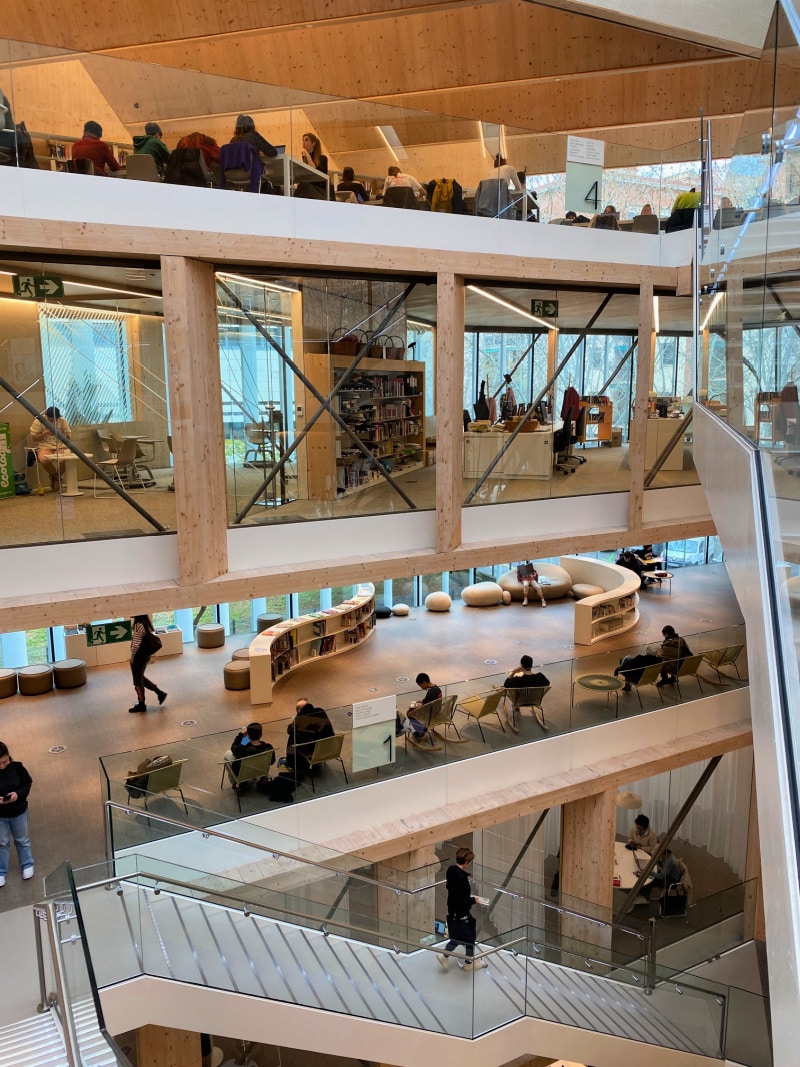
The completed building organises reading rooms around a central atrium that distributes daylight throughout the interior. Timber surfaces contribute to acoustic comfort and spatial clarity, qualities necessary for a heavily occupied library. The building does not rely on technological novelty; its success depends on reliability.
Its broader importance lies in institutional confidence. Public clients must ensure that buildings can be operated, insured and maintained without specialised expertise. By meeting fire regulations, operational requirements and user expectations, the project provides a precedent that future municipal projects can reference internally – within procurement, risk assessment and technical review.
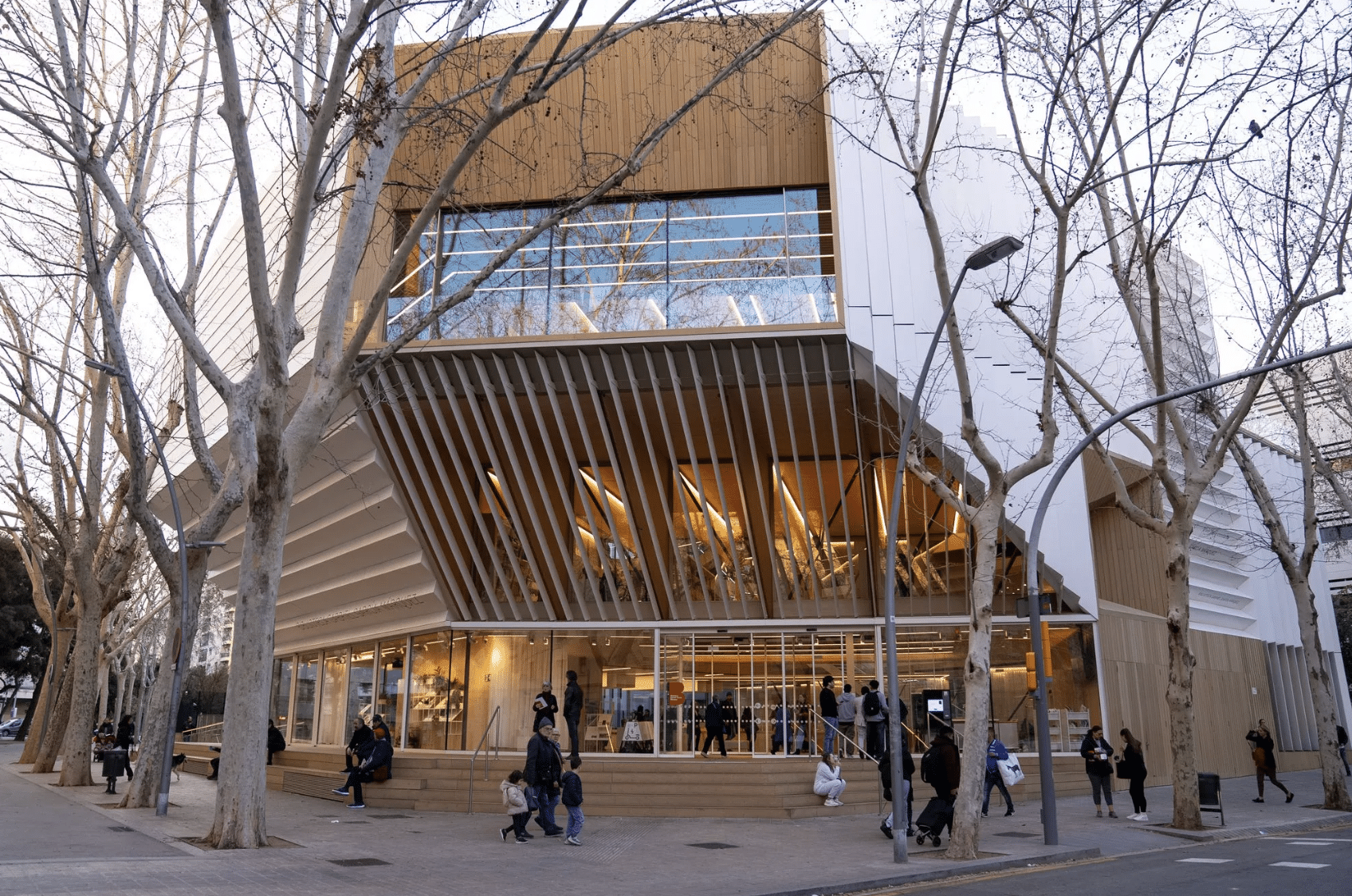
In this sense, the Biblioteca Gabriel García Márquez functions less as a singular sustainable building and more as a procedural example. It demonstrates that lower-carbon and healthier material systems can be delivered through existing public procurement structures rather than outside them.
For practitioners, the lesson is pragmatic. The transition toward regenerative practice does not depend solely on new technologies or exemplary pilot projects, but on expanding what institutions consider normal construction. The project does not solve the environmental impact of the building sector; it changes the starting assumptions for the next project.