The conversation around “forever chemicals” — per- and polyfluoroalkyl substances (PFAS) — is growing louder, and for good reason. These persistent chemicals, found in a surprising array of building products, pose serious threats to human health and ecological integrity. Living Future believes that a regenerative built environment cannot coexist with toxic legacies. That is why PFAS are already restricted under our Red List and excluded from Declare and Living Building Challenge (LBC) certified projects.
Today, as Europe prepares to update its REACH chemical legislation, the debate around PFAS marks a pivotal moment. Will the next generation of buildings perpetuate hidden toxins, or will we seize the opportunity to design with transparency, responsibility, and care?
What Are PFAS, and Why Do They Matter in Buildings?
PFAS are a large class of industrial chemicals defined by their carbon–fluorine bonds — among the strongest in nature. This makes them nearly indestructible. Once produced, they persist indefinitely in the environment and bioaccumulate in our bodies. Exposure is linked to cancers, endocrine disruption, fertility decline, developmental harm, immune suppression, and cardiovascular risk.

In buildings, PFAS deliver “desirable” functions: water- and stain-repellent finishes, weatherproofing, lubrication. But these same properties now mean PFAS are present in paints, sealants, coatings, flooring, insulation, textiles, and more. A recent literature study by Green Transition Denmark mapped PFAS prevalence across construction materials in five international studies, concluding that “PFAS can occur in many parts of the construction industry” — from the product core to surface treatments.
This invisibility is the problem. PFAS are hiding in plain sight, woven into everyday building products, with little awareness of long-term consequences.
Living Future’s Red List Leadership
Where regulation is cautious and incremental, the Red List for materials acts with precaution. PFAS are banned as a class, rather than waiting for substance-by-substance restrictions. This decisive stance aligns with scientific consensus that the class approach is the only way to effectively address PFAS.
Through Declare, product manufacturers disclose material chemistry down to 100 ppm, giving designers clarity about whether PFAS are present. Declare-labelled products that are PFAS-free prove that healthier alternatives are not just possible — they are available now. By eliminating PFAS and other Red List chemicals, project teams pursuing LBC certification ensure that regenerative design starts at the molecular level: a building free from hidden poisons.
Europe at a Crossroads
PFAS are not only a technical issue — they are a societal one. In Belgium’s Zwijndrecht, residents live with the consequences of PFAS contamination, fighting for clean soil and water. Similar hotspots exist across Europe. As one European Commissioner reflected after visiting the site:
“Our goal is to create clearer, simpler rules that protect human health and the environment more effectively, while fostering innovation and competitiveness in our industries. We want businesses to thrive, but never at the expense of the safety and wellbeing of our citizens.”
With the revision of REACH on the horizon, Europe has the opportunity to take global leadership. By banning PFAS in consumer products and clarifying their industrial use, legislators can protect both people and markets from the immense cost of chemical clean-up and healthcare.
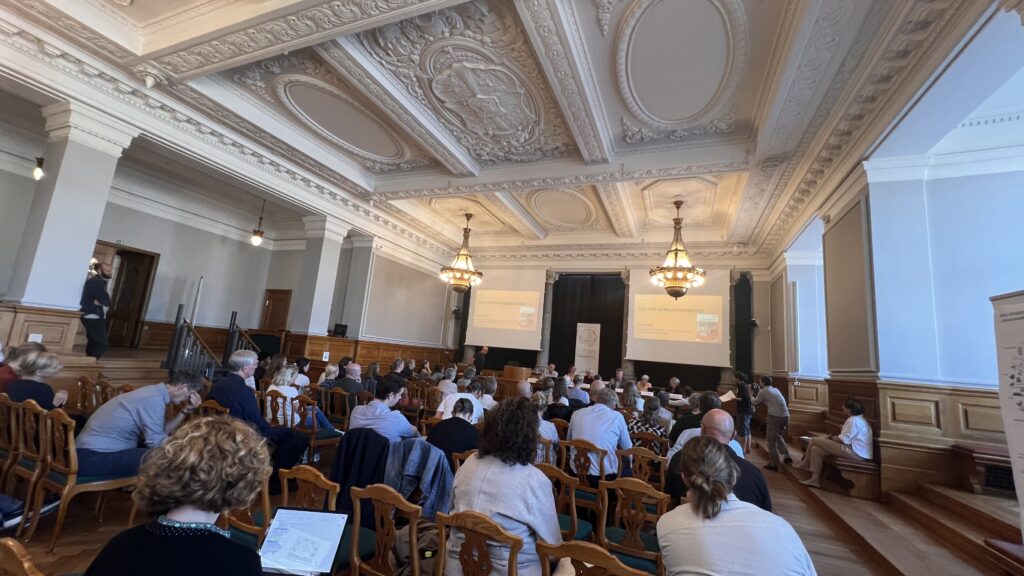
This urgency was explored at the PFAS in Construction Conference on 9 September 2025 at Christiansborg, Copenhagen. The event gathered experts, including Xenia Trier (University of Copenhagen), Christian Poll (Consumer Ombudsman), and Jan René Rasmussen (Gladsaxe Municipality), hosted by Anne Pauline (S). Carlo Battisti, president of LFE also attended the conference. The conference focused on the sector’s toughest questions: Can construction ever truly be PFAS-free? How should PFAS-containing waste be managed? What are the consequences of these chemicals in the buildings where we live and work?
This open dialogue, bridging science, policy, and practice, underscores that construction is a critical vector for change.
From Harm to Health: A Regenerative Materials Future
By leveraging the LBC Red List, Declare labels, and resources like the HPDC PFAS Hub, Europe’s building industry can move faster than regulation alone. The path is clear: PFAS-free materials must become the baseline.
In a regenerative future, materials are not liabilities but assets — safe for humans, circular in use, and contributors to ecological health. Breaking free from forever chemicals is not just compliance. It is the foundation of a building culture that heals.