Living Future Europe (LFE) recently joined the European Federation for Living (EFL) as an Associated Partner and co-hosted a webinar exploring how regenerative-inspired approaches may help strengthen the implementation of the European Affordable Housing Plan (EAHP).
The session brought together housing professionals, practitioners and stakeholders from across Europe around one central question: how can Europe deliver affordable housing that is not only accessible, but also healthy, resilient, sustainable and capable of supporting long-term quality of life?

The webinar also marked the launch of LFE’s new Technical Advisory Group (TAG) position paper:
“The Missing Delivery Framework: A Regenerative-Inspired Approach to the European Affordable Housing Plan.” [link]
The paper argues that Europe’s housing challenge can no longer be understood only through the lens of quantity and speed of delivery. Across Europe, affordability pressures increasingly intersect with energy poverty, climate resilience, public health, construction quality, social inclusion and long-term operational costs.

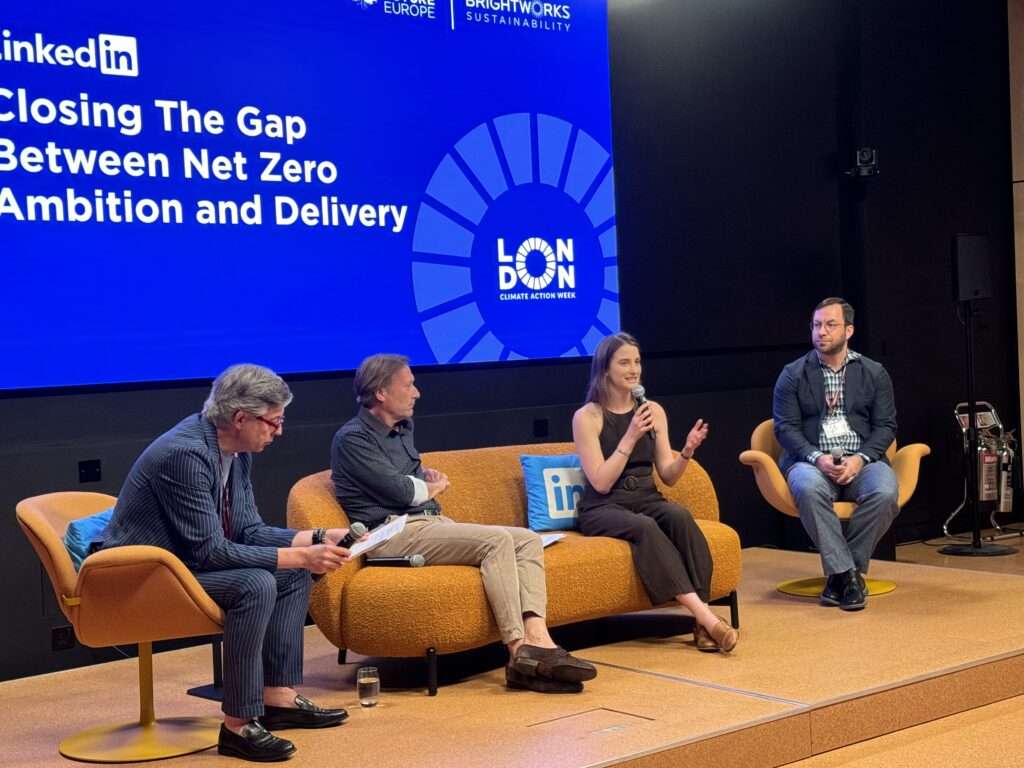
As highlighted during the webinar – featuring LFE’s President Carlo Battisti, and moderated by EFL’s Managing Director Joost Nieuwenhuijzen – housing systems across Europe are facing different but interconnected pressures: collapsing permits in Sweden, affordability burdens in Greece, overcrowding in Romania, and rapidly escalating prices in the Netherlands. Together, these dynamics reveal that the challenge is no longer only how many homes Europe builds — but what kind of housing futures are being created.
While LFE welcomes the European Affordable Housing Plan as a landmark commitment, the report highlights an important implementation challenge: how can Europe operationalise affordable housing delivery in ways that also generate long-term environmental and social value?
Drawing from regenerative design principles and the Living Building Challenge Framework for Affordable Housing, the paper proposes a broader understanding of affordability — one that includes operational affordability, resilience, health, material safety, social cohesion and lifecycle performance.
The report also presents several emerging regenerative-oriented trajectories already visible across Europe and beyond, including cooperative housing models, district-scale regeneration, circular construction strategies and community-led neighbourhood transformation.
At the same time, LFE is pleased to announce its participation in The European Housing Alliance, further strengthening collaboration with European actors working toward more sustainable, inclusive and resilient housing systems.
The webinar confirmed a growing interest within the housing sector around practical pathways capable of connecting affordability, sustainability, resilience and long-term wellbeing — not as competing priorities, but as interconnected dimensions of future-ready housing systems.
As Europe enters a decisive decade for housing delivery, LFE looks forward to continuing collaboration with housing providers, municipalities, developers, researchers and policymakers interested in advancing regenerative approaches within affordable housing.
If you are exploring how regenerative frameworks and Living Future methodologies could support your affordable housing projects, we warmly invite you to connect with us.
“The Missing Delivery Framework: A Regenerative-Inspired Approach to the European Affordable Housing Plan.”