Skip to content
  • What We Do
  • Solutions
  • About Us
  • Contact Us

Services

  • Training
  • Consulting
  • Case Studies

Events

Research

Courses

Publications
Take a look at our various publications, showcasing the findings of our research in the field of regenerative design.
Explore Now

Regenerative Buildings

  • Biophilia

Healthy & Circular Materials

Equitable Organisations

Blog

Contact Us
Get in touch for any queries, concerns or further information.
Get in touch

From Innovation to Collective Practice: Materials Matter

  • 30 June 2026
  • News
  • Living Future Europe, regenerative design, regenerative sustainability
By Krys Kontos, Living Future Europe
 

How do we move from promising innovation to widespread implementation?

That question sat at the heart of
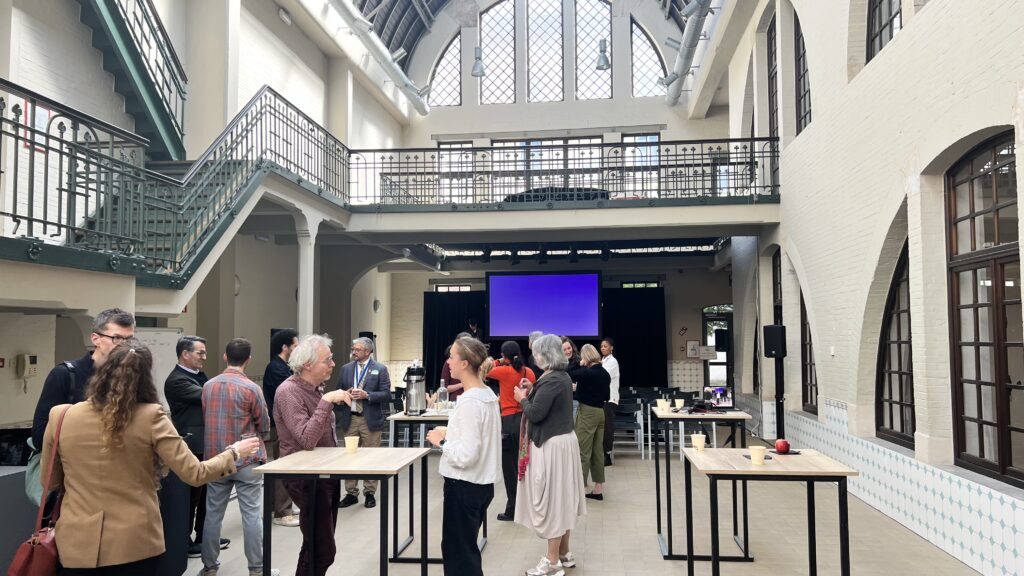
The Materials Matters Summit: From Innovation to Collective Practice, hosted by Living Future Europe and Brightworks Sustainability during the New European Bauhaus Festival in Brussels.

Bringing together policymakers, city leaders, architects, manufacturers, researchers and sustainability practitioners, the summit explored one of the built environment’s most pressing challenges: while healthier, lower-carbon and regenerative material solutions already exist, they have yet to become the standard across the industry.

Through a series of rapid-fire lightning talks followed by collaborative manifesto workshops, the summit examined not only what needs to change, but how Europe can collectively accelerate the transition towards a healthier and more regenerative materials economy.

The conversations reflected a growing recognition that material choices influence far more than carbon emissions. They shape human health, biodiversity, circularity, regional resilience, supply chains, and ultimately the future of our built environment.


Setting the European Agenda

Opening the summit, Pieter Staelens, Head of Sector for Sustainable Construction at the European Commission, outlined how European policy is increasingly recognising the central role of materials in delivering the Green Deal, housing affordability and industrial competitiveness.

From the revised Construction Products Regulation and Digital Product Passports to lifecycle carbon assessment, circular economy legislation and green public procurement, the message was clear: sustainability and competitiveness are no longer competing priorities—they are mutually reinforcing. As European policy evolves, material transparency, embodied carbon and circularity are becoming fundamental components of how buildings are designed, procured and delivered.

This policy context framed the discussions that followed, highlighting the opportunity—and responsibility—for industry to move beyond compliance and towards leadership.


From Conversation to Collective Action

Rather than concluding with another panel discussion, participants were invited to become co-authors of the conversation.
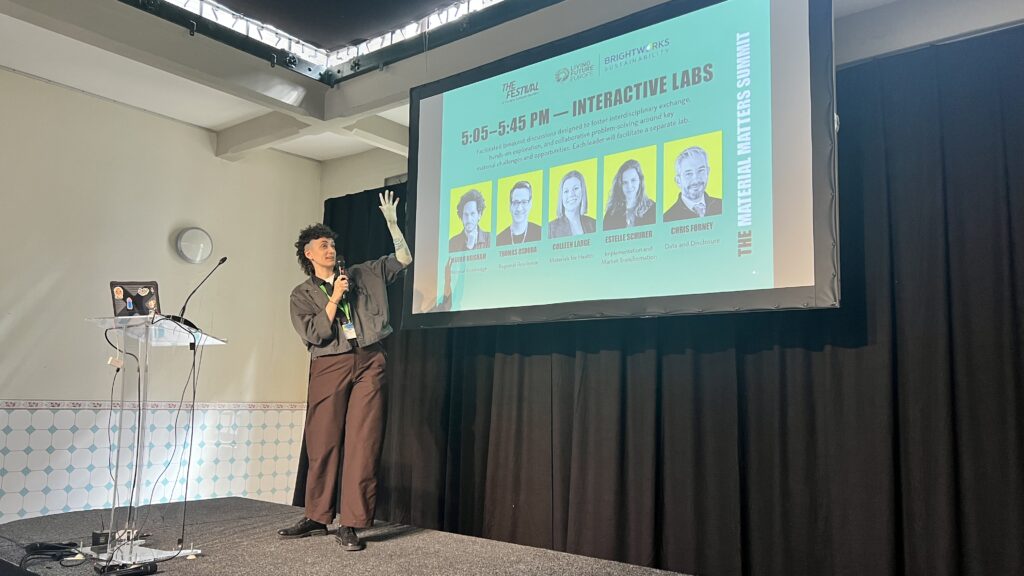


Facilitated by experts from Materiatek, NetZeroCities, Brightworks Sustainability and Gensler, attendees joined five themed manifesto labs to collectively explore the opportunities and barriers shaping the future of materials.

Working across topics including material literacy, regional resilience, healthy materials, implementation and market transformation, and data transparency, each group was asked to respond to three simple but powerful questions:

  • What do we believe?
  • What do we call for?
  • What do we commit to?

The result was not a single statement, but five interconnected chapters of a shared vision—one that recognises that transforming Europe’s material economy will require coordinated action across policy, practice, industry and civil society.

The Materials Matters Manifesto

1. Material Knowledge, Transparency & Informed Decision-Making

Facilitated by Mauro Brigham, Co-Founder, Materiatek

We Believe…

Every material tells a story. Better decisions begin with better understanding, where information on origin, composition, health, carbon, circularity and social impact is transparent, accessible and trusted.

We Call For…

Greater material literacy through open knowledge platforms, material libraries and transparent product information that empowers everyone—from designers and manufacturers to clients and policymakers—to make informed choices.

We Commit To…

Championing transparency, asking better questions about the materials we specify, and sharing knowledge openly to build a more informed and regenerative materials culture.

2. Context, Local Loops, Regional Resilience & Collective Action

Facilitated by Thomas Osdoba, Managing Director, NetZeroCities

We Believe…

Regenerative material ecosystems are built through collaboration. Cities, industry, communities and policymakers all have a role in creating resilient local supply chains and circular regional economies.

We Call For…

Stronger partnerships, aligned governance, supportive procurement policies and investment in regional value chains that enable local innovation to scale.

We Commit To…

Breaking down silos, strengthening cross-sector collaboration and supporting local ecosystems that create long-term environmental, social and economic value.

3. Materials for Human & Planetary Health

Facilitated by Colleen Large, Materials Specialist, Brightworks Sustainability

We Believe…

Healthy materials are fundamental to healthy people, healthy communities and a thriving planet. Material choices should actively contribute to wellbeing rather than simply reducing harm.

We Call For…

Greater transparency around material ingredients, the elimination of harmful substances, and broader adoption of healthier material practices across design, manufacturing and construction.

We Commit To…

Prioritising material health in our projects, advocating for safer alternatives and embedding human and planetary wellbeing into every stage of the design process.

4. Implementation & Market Transformation

Facilitated by Estelle Schurer, Associate, Gensler

We Believe…

Innovation alone is not enough. Transforming the market requires aligned policy, procurement, investment and demand to make regenerative materials the default rather than the exception.

We Call For…

Policies that reward regenerative outcomes, procurement that values long-term impact over lowest cost, and stronger collaboration between designers, manufacturers, developers and public authorities.

We Commit To…

Embedding regenerative principles into everyday decision-making and using our influence to accelerate implementation across projects, organisations and supply chains.

5. Data, Disclosure & Market Transformation

Facilitated by Chris Forney, Principal, Brightworks Sustainability

We Believe…

Healthy, sustainable and just material selection should be intuitive and accessible. Better data should make better decisions easier—not more complicated.

We Call For…

Greater education and professional development to bridge the gap between rapidly evolving material science and everyday practice, alongside digital tools that simplify complex information into actionable insights.

We Commit To…

Making the impacts of materials part of our daily conversations and embedding transparency, disclosure and informed decision-making into the way we design, specify and build.


A Collective Commitment

From European policy and city leadership to product innovation, healthy materials and digital transparency, the five manifesto chapters reflected a common conclusion: the knowledge, technologies and solutions already exist. The next step is collective implementation.

Developed collaboratively during the New European Bauhaus Festival, the Materials Matters Manifesto is both a reflection of the summit discussions and a shared call to action—inviting everyone across the built environment to move beyond individual innovation and towards a future where healthy, regenerative and transparent material choices become the norm.

PrevPreviousBiophilia Summit 2026 – Call for Contributions

Our Categories

Events
71 Posts
News
158 Posts

Share Post

Get In Touch

Interested in adopting one of our programs for your building, product, organisation?
Contact Us

Related Posts

News | Events

Biophilia Summit 2026 – Call for Contributions

Biophilia Summit 2026 Call for Contributions Biophilia in Practice: Sensing, Belonging, Regenerating Shape the Future...

Read More
News

Closing the Gap Between Net Zero Ambition and Delivery

By Carlo Battisti, Living Future Europe During this year’s London Climate Action Week, Living Future...

Read More
News

Beyond Quantity: Regenerative Pathways for Affordable Housing in Europe

By Carlo Battisti, Living Future Europe Living Future Europe (LFE) recently joined the European Federation...

Read More
News

From Vision to Practice: Closing the 2026 LFE Masterclass on Regenerative Design

By Carlo Battisti, Living Future Europe Living Future Europe’s 2026 Masterclass: Regenerative Design in Practice...

Read More
News

Building a Shared Sustainability Culture Across Research Laboratories

By Carlo Battisti, Living Future Europe Living Future Europe recently delivered a two-part introductory course...

Read More
News

Living Future Europe and Ramboll Launch New Publication on the Business Case for Regenerative Design

Exploring how regenerative approaches can create measurable financial, social, human, and ecological value across the...

Read More

Sign Up To Our Newsletter For Exclusive Insights

Services

  • Training
  • Consulting
  • Case Studies

Events

Research

Courses

Solutions

  • Regenerative Buildings
  • Healthy & Circular Materials
  • Equitable Organisations

Blog

Investors

About Us

Contact

Privacy Policy

Terms & Conditions

+39 338 4490565

info@living-future.eu

Copyright 2026

CF 94146560217

VAT No. IT 03129510214

Made By Nivo Digital

EarthDay-Negpng
JustLogo-white-1 copy
NewEuropeanBauhaus-signature-1-300x165

Registered in RUNTS [Registro unico nazionale del Terzo settore]

Services

Events

Courses

Solutions

Blog

About Us

Contact

Fill in the form below to download the Living Future Europe 2025–2027 Strategic Plan