Closing Thoughts from the Regenerative Design in Digital Practice: Tools for Ecology, Carbon & Health
What a remarkable journey this edition of Regenerative Design in Digital Practice has been. Over the course of a single day, we travelled across an extraordinary landscape of digital tools, design intelligence, and regenerative ambition through design, guided by speakers whose work is reshaping how we think, model, simulate, and ultimately make decisions about the built environment.
A theme rose unmistakably to the surface: our tools are no longer passive utilities. As co-organiser Dr. Emanuele Naboni reflected, “our tools are increasingly becoming extensions of thought rather than routine utilities.” This sentiment echoed across the cohort. The tools that discussed most were light, intuitive, customisable, and capable of guiding us without being overwhelming.

Across the day, the evolution of digital practice came into focus through the tools and methods our speakers shared. Jakob Strømann-Andersen (Henning Larsen) demonstrated how scenario-based modelling can generate thousands of parallel futures, offering designers a broader ecological and performance landscape from which to choose. Sanne van der Burgh (MVRDV NEXT) showed how decarbonisation must begin at concept stage, not post-rationalised, expanding on embodied carbon benchmarking, façade performance, and early-stage massing impacts.
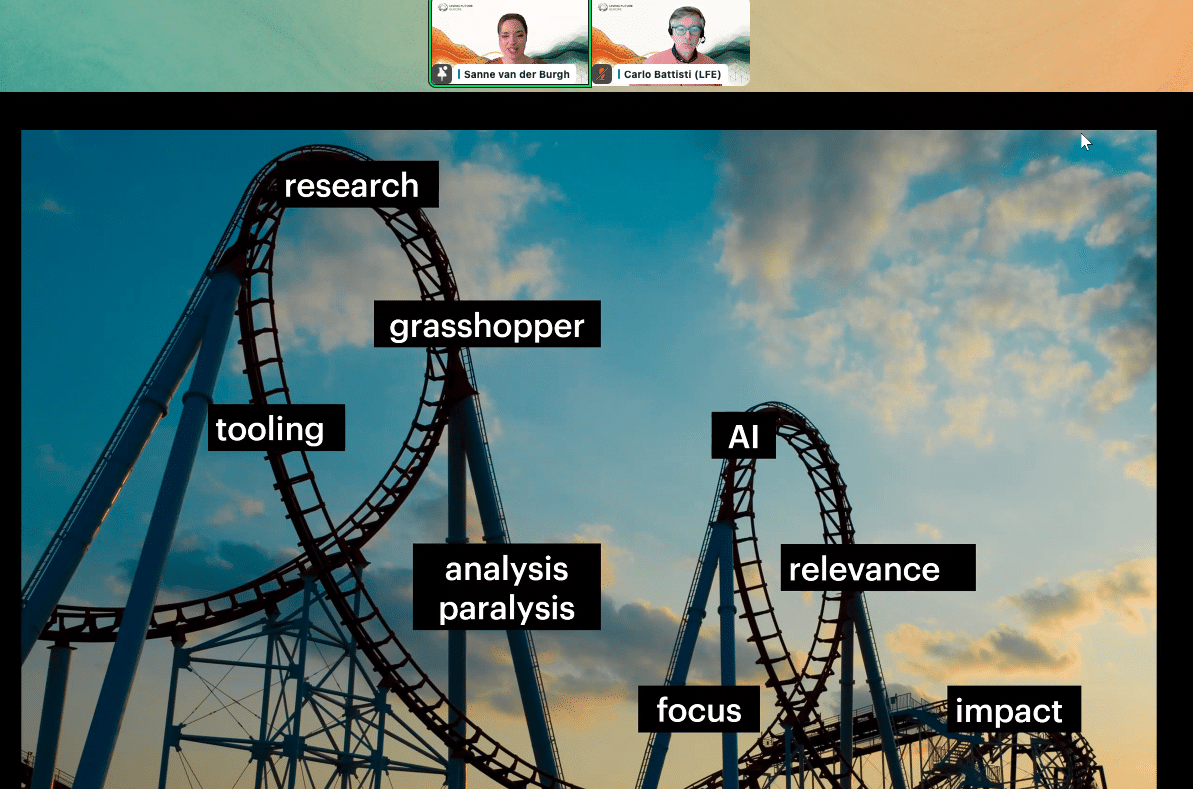
Nitsan Bartov (Henning Larsen) connected climatic, spatial, and material data into a single decision space, illustrating how carbon roadmaps become meaningful only when grounded in local datasets and regulatory realities. From Paul Toyne (Grimshaw) came a pragmatic lens on how carbon, regulatory constraints, and project delivery realities intersect, answering numerous participant questions about how to navigate large, multidisciplinary tools without losing sight of the decarbonisation target. Verena Vogler, Eleftherios Kourkopoulos, and Jens Joschinski (McNeel Europe, Rhino Ecologic) revealed how voxel-based modelling in Rhino Ecologic can turn overwhelming environmental datasets into visual clarity and qualitative data.

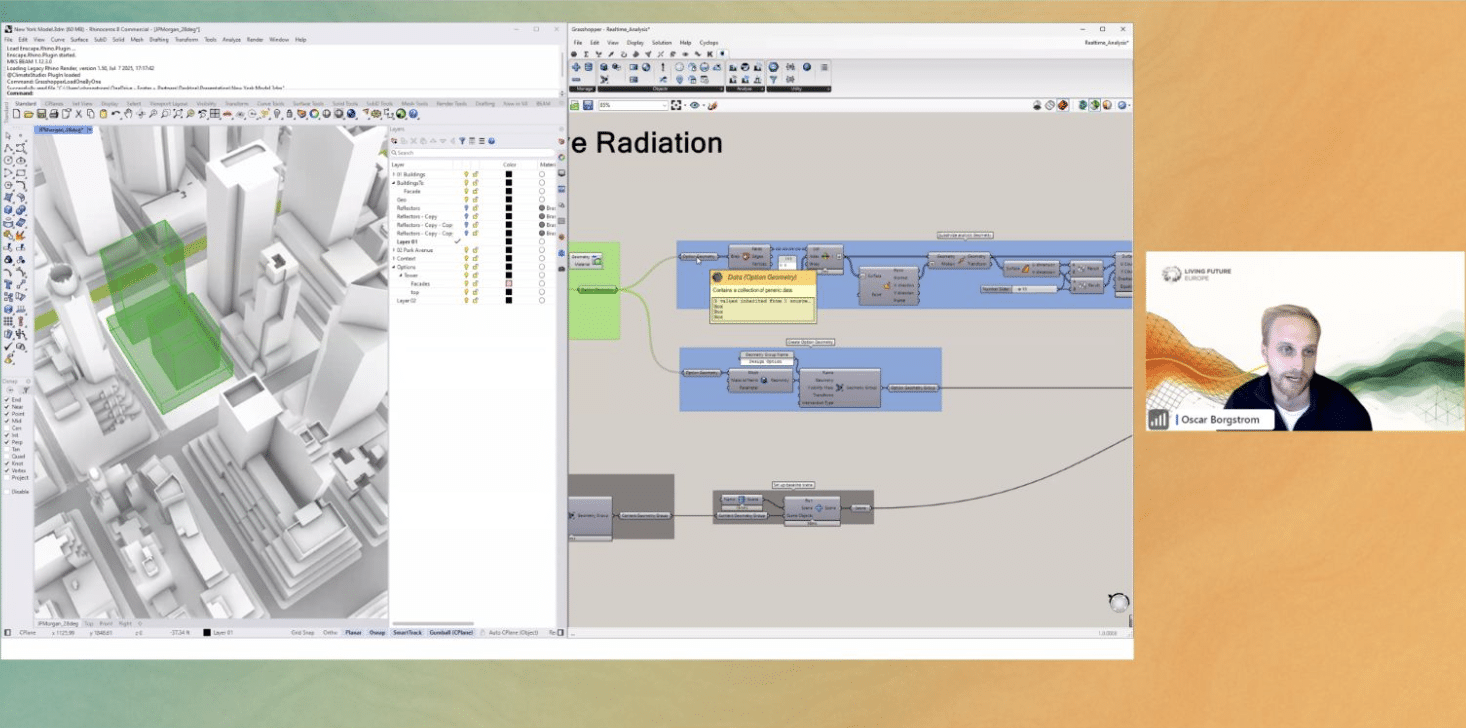
Emily Scoones (Ramboll Institute) highlighted how parametric design and circular economy modelling can align, offering strategies to reduce material impacts while improving system performance with Ramboll’s internal toolset. The Cyclops team, Oscar Borgström and Wojciech Karnowka (Foster + Partners) showcased how real-time GPU-driven simulation collapses the gap between design intent and environmental feedback. Their demonstrations showed modeling impact at the speed of thought. Mostapha Sadeghipour Roudsari and Chris Mackey (Ladybug Tools) showed how open-source climate engines democratise environmental modelling, enabling practitioners to customize workflows rather than conform to rigid software systems.
Tore Banke (Third Nature) brought a sobering clarity about the responsibilities carried in data-driven design, especially when balancing adaptation and mitigation strategies at urban scales. Ata Chokhachian (MIT) added nuance around microscale simulation, showing how human comfort and spatial behavior must sit alongside climate metrics.
Finally, Carlo Battisti (Living Future Europe) and Emanuele Naboni (University of Sevilla) reminded us of the larger ethical and regenerative frame: that digital tools are not neutral, and their greatest potential lies in helping us design for all life.
Two takeaways became unmistakable:
First: the future of digital practice belongs to the designer who customises their tools to fit the ecological, material, and cultural specificity of each project. Off-the-shelf workflows no longer match the pace of climate-critical design. Designers are assembling their own ecosystems of scripts, models, datasets, and micro-tools that reflect not only how they think, but the kind of world they are trying to build.
Second: there is a growing hunger for lightweight, scientifically robust tools that close the gap between insight and action. For years, the industry has spoken about seamless workflows, yet true fluidity has remained elusive. And while AI dominates today’s discourse, it has not yet meaningfully reshaped digital practice in climate modelling, remaining a quiet optimizer rather than the generative partner many envision.
This is where Dr. Naboni’s introduction of what he describes as a “regenerative palette” offered a glimpse of what may come next: a suite of intuitive, peer-reviewed, interoperable Grasshopper tools capable of modelling climate change, living systems, biodiversity, carbon flows beyond operational and embodied, and health impacts across scales. Tools that do not replace designer judgment, but strengthen it. Tools already finding their way into leading practices and academic institutions committed to regenerative action.
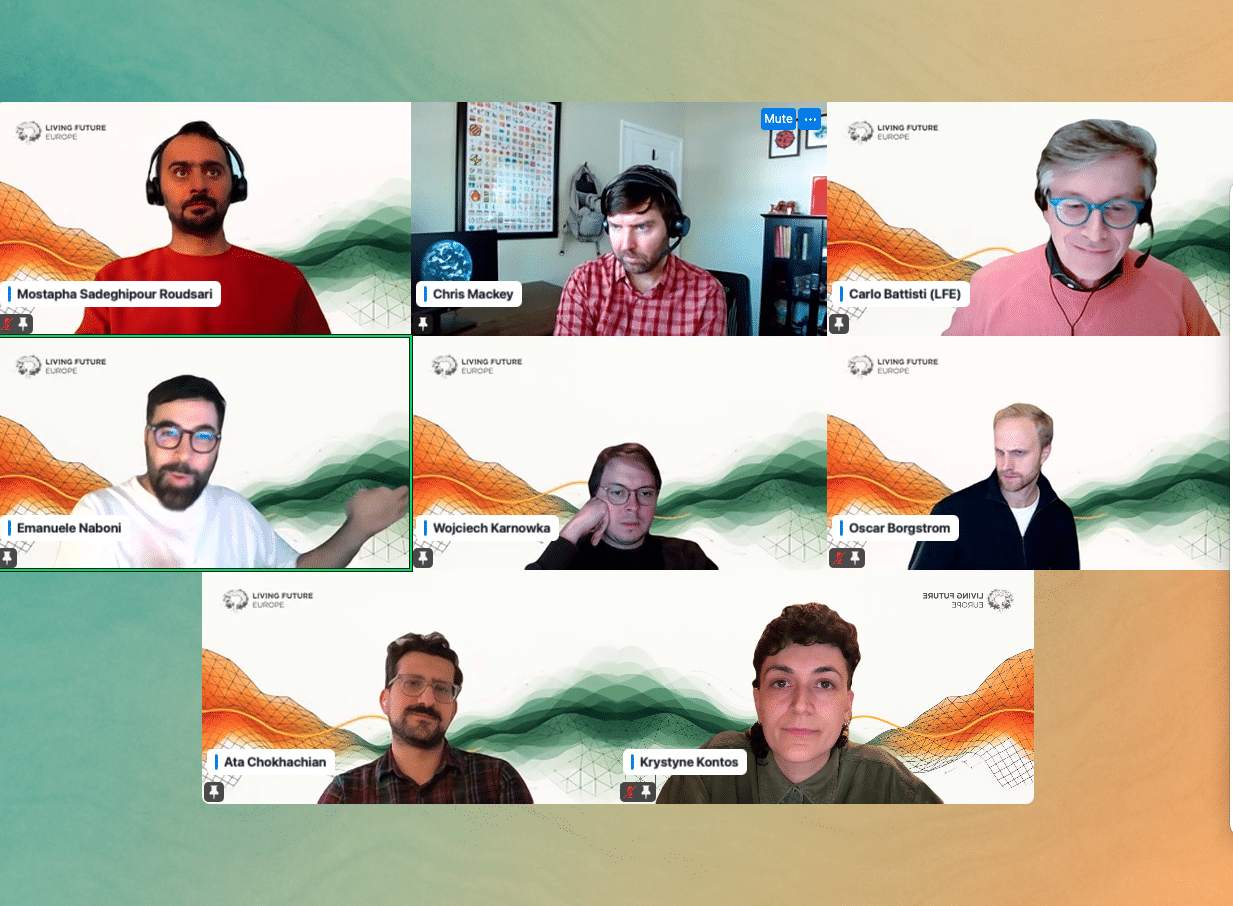
To all our speakers, partners, co-organisers, and participants, thank you! Your generosity, curiosity, and technical insight brought this edition to life!